
 Alice Leroy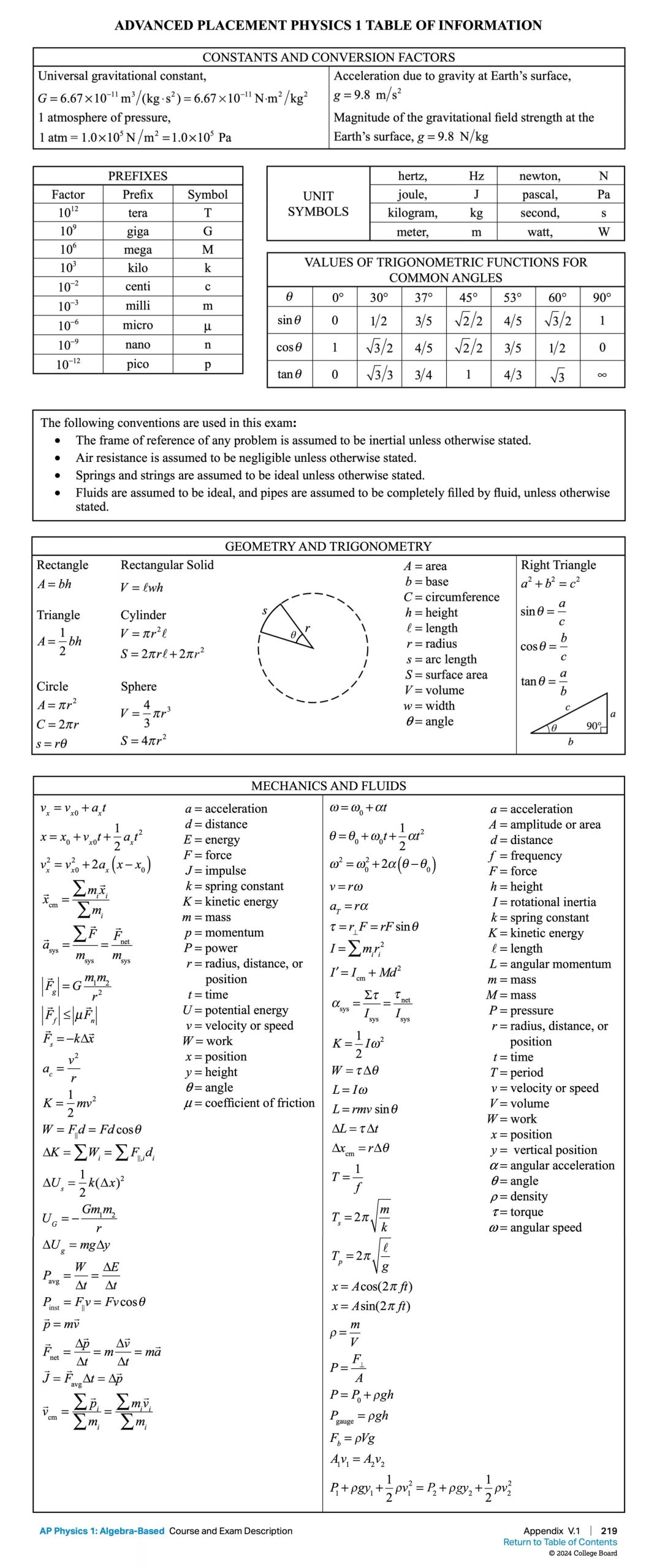
Looking for the ultimate AP Physics Formula Sheet? Look no further. This comprehensive guide brings all the essential equations and formulas at your fingertips. From mechanics to electricity and magnetism, this resource is a must-have for mastering AP Physics. Ready to ace your exams with confidence? Let’s dive in!

Unlocking the Secrets of the AP Physics Formula Sheet
The Importance of the AP Physics Formula Sheet
Imagine having a magical key that can unlock the mysteries of the universe. Well, in the world of physics, that key comes in the form of the AP Physics formula sheet. This sheet contains a treasure trove of equations and formulas that can help you navigate the complexities of the physical world. Whether you’re a budding scientist or just a curious mind, understanding and mastering the AP Physics formula sheet can open up a world of possibilities.
Breaking Down the AP Physics Formula Sheet
Let’s dive into the world of physics and explore some of the key formulas and equations that you’ll find on the AP Physics formula sheet. From mechanics to electricity and magnetism, each section of the formula sheet is designed to help you solve different types of problems and understand the fundamental principles of physics.
1. Mechanics
In the mechanics section of the formula sheet, you’ll encounter equations that relate to motion, forces, energy, and momentum. These formulas can help you calculate the speed of an object, determine the forces acting on it, or even predict its future motion. For example, the equation F = ma, which stands for force equals mass times acceleration, is a fundamental formula in mechanics that can help you understand the relationship between force, mass, and acceleration.
2. Electricity and Magnetism
The electricity and magnetism section of the formula sheet deals with concepts related to electric fields, magnetic fields, and circuits. Here, you’ll find equations that can help you calculate the strength of an electric field, determine the force on a charged particle in a magnetic field, or analyze the behavior of circuits. One important equation in this section is V = IR, which represents Ohm’s Law and describes the relationship between voltage, current, and resistance in an electrical circuit.
3. Waves and Optics
Waves and optics are another key area covered in the AP Physics formula sheet. This section includes formulas that relate to the properties of waves, such as frequency, wavelength, and speed, as well as equations that describe the behavior of light and optics. For example, the equation v = fλ represents the relationship between the speed of a wave, its frequency, and its wavelength, which can help you understand how waves propagate through different mediums.
Tips for Using the AP Physics Formula Sheet
Now that you have a better understanding of what the AP Physics formula sheet contains, let’s explore some tips on how to effectively use this invaluable resource to your advantage.
1. Familiarize Yourself with the Formulas
The first step to mastering the AP Physics formula sheet is to familiarize yourself with the various formulas and equations it contains. Take the time to study each formula and understand how it relates to different concepts in physics. By knowing which formula to use in a given situation, you can quickly solve problems and tackle challenging questions with confidence.
2. Practice, Practice, Practice
Like any skill, mastering the AP Physics formula sheet requires practice. Make use of practice problems and sample questions to apply the formulas in different scenarios and test your understanding of the concepts. The more you practice using the formulas, the more comfortable you’ll become with applying them in real-world situations.
3. Create a Cheat Sheet
To help you memorize the formulas and equations on the AP Physics formula sheet, consider creating your own cheat sheet. Write down each formula along with a brief description of what it represents to help reinforce your understanding. Having a personalized cheat sheet can serve as a handy reference tool during exams or study sessions.
In conclusion, the AP Physics formula sheet is a powerful tool that can help you unlock the secrets of the physical world. By understanding the formulas and equations it contains, and following the tips outlined in this article, you can confidently navigate the complexities of physics and excel in your studies. So, embrace the magic of the AP Physics formula sheet and let it guide you on your journey to becoming a physics wizard!
Every AP Physics 1 Equation To Know – Speed Review (+25 derived equations memorize)
Frequently Asked Questions
What are the key formulas included in the AP Physics formula sheet?
The AP Physics formula sheet includes essential formulas for topics such as mechanics, electricity, magnetism, waves, optics, and modern physics. These formulas cover concepts like kinematics, forces, energy, electric circuits, magnetic fields, wave properties, and nuclear physics.
How should I use the AP Physics formula sheet during the exam?
During the exam, it is crucial to familiarize yourself with the formulas on the sheet beforehand. Use it as a reference guide to quickly find the relevant formula when solving problems. Remember to pay attention to the units and variables associated with each formula to ensure accurate calculations.
Are all formulas provided on the AP Physics formula sheet, or do I need to memorize some?
While the AP Physics formula sheet contains many important formulas, there are certain fundamental equations and concepts that you are expected to have memorized for the exam. Make sure to understand the derivation and application of these core formulas in addition to using the formula sheet as a resource.
Final Thoughts
In conclusion, mastering the AP Physics formula sheet is crucial for exam success. Understanding and applying these formulas effectively can significantly improve your performance. Regular practice and familiarizing yourself with the formulas will boost your confidence on test day. Utilize the AP Physics formula sheet as a valuable resource in your preparation.